news
Sunshine Coast's Misleading Property Images Create Growing Planning Crisis
Duplicate and misleading property images have been circulating through development applications and short-term rental listings for years, here's how the region got to this point.
How we reported this
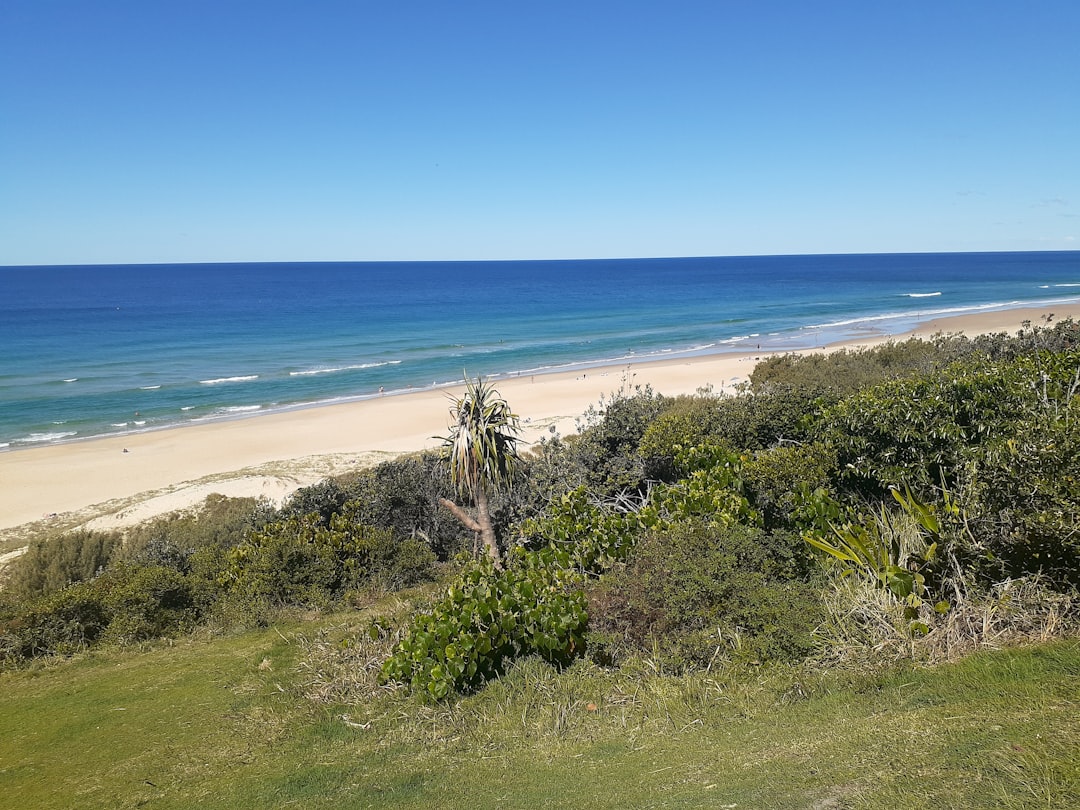
Planning officers at Sunshine Coast Council began flagging a recurring problem as far back as 2022: development application files were turning up with the same site photographs attached to multiple, unrelated properties. The issue was low-profile then. By mid-2026, with Maroochydore's CBD construction corridor expanding rapidly and short-term rental regulation tightening across Queensland, the stakes of getting visual documentation right have grown considerably.
The immediate trigger is the state government's push to enforce stricter compliance standards for short-term rental platforms under Queensland's Accommodation (Short-term Rental Accommodation) Act. Property listings on platforms operating in hotspots like Noosa Heads and Minyama are now subject to closer council scrutiny, and accurate, property-specific imagery is part of that compliance picture. When the same stock photograph shows up across a dozen listings on the same street in Buddina or Cotton Tree, it muddies the evidentiary record that councils and state agencies rely on.
A slow build with deep local roots
The problem didn't arrive overnight. The Sunshine Coast has been one of Australia's fastest-growing coastal corridors for the better part of a decade. The population of the local government area crossed 370,000 residents around 2024, and the volume of development applications lodged with Sunshine Coast Council climbed accordingly. When caseloads surge, quality-control gaps open up, and image duplication is one of the more mundane but consequential ones.
Maroochydore's new city centre has been a particular pressure point. The Town of Maroochydore project, managed by Sunland and subsequently through Stockland's involvement in key parcels, generated hundreds of planning documents in the 2021-2025 period. Multiple planning consultants operating across the same precinct, bounded roughly by Dalton Drive to the west and the Cornmeal Creek parklands to the east, drew on shared image libraries. That practice is standard across the industry, but without metadata checking or image-hash verification, identical photographs ended up attached to separate site assessments for distinct allotments.
The Sunshine Coast University Hospital expansion, which moved through its planning phases from 2023 onward on Doherty Street in Birtinya, added another layer of complexity. Contractors and subcontractors submitted hundreds of compliance photographs to both Queensland Health and council. Sources familiar with the project's documentation process, without naming individuals, have previously noted in public forums that image provenance checking was not a mandated step in early rounds of that work.
What the evidence actually shows
Sunshine Coast Council's own development register, which is publicly searchable, shows more than 4,800 applications were lodged in the 2024-25 financial year. That volume is more than double the annual figures recorded a decade earlier. Planning industry bodies, including the Planning Institute of Australia's Queensland chapter, have noted in public submissions to state reviews that documentation integrity tools have not kept pace with application volumes, though the council itself has not made a specific public statement attributing the image duplication problem to resourcing.
On the short-term rental side, platforms that list properties in the Sunshine Coast region, which recorded occupancy rates well above the Queensland coastal average through the summer of 2025-26, began receiving compliance notices from council's regulatory team earlier this year. Several listings in the Hastings Street precinct in Noosa and along the Esplanade in Mooloolaba were identified as using images that did not correspond to the advertised property.
For property owners and applicants, the practical consequence is straightforward: re-submissions cost time and money. A standard DA re-lodgement on the Sunshine Coast attracts a re-assessment fee that, depending on the project category, can run into several thousand dollars under the current council fee schedule.
Council has indicated, through its published 2025-26 Digital Planning Roadmap, that automated document checking tools are being trialled. The roadmap sets a target of full integration with the state's MyDAS2 platform by the third quarter of 2026. Whether that rollout meets that window will determine how quickly this particular compliance headache gets a structural fix, rather than being managed case by case.